

.jpg)

.jpg)
.svg)
When AI sends a qualified buyer, every word, signal, and step should make choosing your brand easier.
AI-referred buyers should instantly understand your value, difference, proof, and next step.

Visitors understand what you offer, who you help, and why your company matters within seconds.

Each page matches the problem, need, or question that brought the buyer from AI search.

Results, case studies, reviews, and authority appear exactly where buyers need reassurance.

The concerns that create hesitation are answered before they can stop the sale.

Visitors know why the solution fits and exactly what action to take next.

Testing, behavior, sales feedback, and performance data keep improving the experience.
One connected conversion system from recommendation to revenue.


Sales Website Conversion is the strategy and ongoing optimization of your website around how real buyers decide. Alskly connects positioning, buyer intent, page structure, proof, calls to action, conversion paths, testing, and revenue measurement so qualified visitors are more likely to become leads, bookings, demos, opportunities, and customers.
A conventional redesign often begins with appearance, pages, or a new visual system. Alskly begins with the buyer, the offer, the decision, the strongest proof, the objections, and the commercial action each page must produce. Design supports that strategy, and performance data keeps improving it after launch.
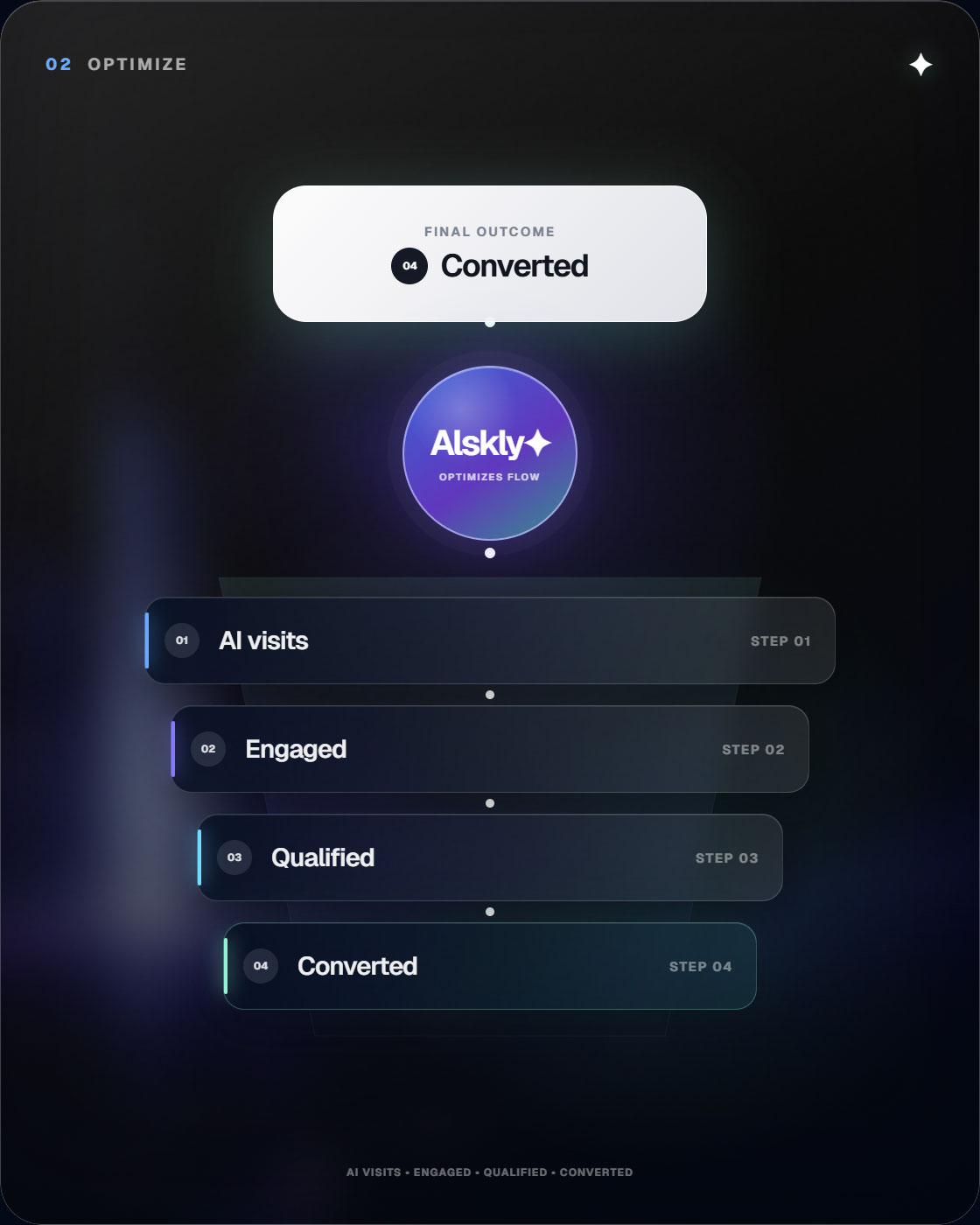
Traditional CRO often starts after traffic reaches an existing experience. Alskly works further upstream: we connect the question a buyer asks AI, the recommendation that creates the visit, the landing-page message they see, the proof they need, and the action that creates revenue. Testing is one part of a broader recommendation-to-revenue system.
An AI-referred visitor often arrives after asking a detailed question, comparing alternatives, or requesting a recommendation. That creates strong intent and a specific expectation. The page should continue the decision the buyer was already making instead of forcing them to restart their research on a generic homepage.
GEO, AEO, SEO, and paid media create discovery and demand. Sales Website Conversion takes responsibility for what happens after the click. The same clarity, proof, intent match, and friction reduction can improve performance across AI referrals, organic search, paid campaigns, email, partner traffic, and direct visits.
The strongest fit is an established company with a meaningful offer, identifiable buyer groups, measurable commercial goals, and a team prepared to improve the website based on evidence. It is especially valuable when the brand is investing in demand but the website is not converting enough of that attention into qualified action.
Yes, when there is a clear buyer journey and a measurable conversion. The strategy changes by business model: a complex B2B sale may prioritize qualification, demos, proof, and sales enablement, while ecommerce may prioritize product understanding, trust, checkout, and repeat purchase. Fit is confirmed during discovery.
Yes. We can account for multiple audiences, markets, languages, locations, products, stakeholder groups, and regional conversion paths. Enterprise scope also considers governance, approvals, analytics consistency, technical dependencies, and how successful patterns will be scaled without creating a fragmented site.
Yes, provided the right subject-matter experts and review process are available. Claims, proof, legal requirements, accessibility, privacy, and approval controls are identified before publishing. Alskly does not replace legal, regulatory, security, or compliance review.
Yes. Alskly can lead the conversion strategy or collaborate with internal marketing, sales, product, design, analytics, engineering, SEO, media, and web partners. Responsibilities, decision rights, review steps, and handoffs are made explicit so work does not stall between teams.
Scope can include buyer and intent research, positioning, messaging, offer design, page architecture, landing pages, navigation, calls to action, forms, pricing presentation, proof, case studies, comparisons, mobile journeys, conversion tracking, experimentation, and an ordered roadmap tied to commercial priorities.
Engagements are built around what your team needs. Alskly can connect buyer research, conversion strategy, page architecture, messaging, experience design, implementation guidance, testing, and measurement. The exact deliverables and who builds, approves, and publishes each change are agreed before work begins.
Not necessarily. We first evaluate the current experience, technical constraints, buyer journey, and commercial goals. Some companies need focused improvements to a few high-value pages; others need a new page system or broader rebuild. The recommendation is based on expected impact, not a preference to replace everything.
We prioritize pages closest to high-value demand: AI and search landing pages, core product or service pages, pricing, comparisons, alternatives, industries, use cases, demo and booking paths, and pages sales teams rely on during a buying decision. Priority reflects intent, traffic, friction, revenue potential, and implementation effort.
Depending on the buyer, this can include quantified results, case studies, customer reviews, client logos, before-and-after evidence, product demonstrations, expert credentials, certifications, industry recognition, third-party validation, guarantees, security information, pricing clarity, and objection-handling content.
Those factors are part of conversion quality. Alskly reviews responsive behavior, content hierarchy, interaction clarity, form usability, page performance, and obvious accessibility barriers within the agreed scope. Deeper remediation or certification requirements are identified separately and assigned to the appropriate specialists.
Usually. We assess the CMS, ecommerce platform, analytics, forms, booking tools, CRM, experimentation tools, deployment process, and internal development resources before recommending an approach. We work within the existing stack when it can support the strategy and identify limitations before they become delivery risks.
We begin by defining the buyer, offer, desired outcome, strongest proof, main objections, current conversion path, and commercial goal. Alskly then maps the highest-impact pages and opportunities, agrees priorities with your team, and turns them into a practical build-and-test roadmap.
Research can include buyer questions, answer-engine prompts, analytics, conversion paths, search demand, sales-call patterns, competitor experiences, customer language, objections, reviews, proof, win-loss feedback, user behavior, and stakeholder interviews. The goal is to understand what buyers need before visiting, after landing, and immediately before acting.
Useful inputs include analytics, conversion data, existing research, customer proof, case studies, brand guidelines, platform constraints, priority markets, sales feedback, and access to the people who understand the buyer and offer. We request only what is necessary and confirm permissions before connecting sensitive systems.
Your team provides subject-matter context, proof, approvals, and access to key stakeholders. The exact cadence depends on scope, but Alskly keeps requests structured with clear owners and deadlines. A responsive decision-maker and reliable review process materially improve delivery speed.
We agree who can provide input, who has final approval, and what legal, brand, product, security, or compliance reviews are required. Changes are presented with the strategic reason behind them so stakeholders can evaluate the buyer impact, not just personal preference.
Timing depends on research depth, number and complexity of pages, technical requirements, proof availability, integrations, and approval speed. The delivery plan, milestones, dependencies, review windows, and launch responsibilities are defined before the engagement starts rather than estimated with a generic timeline.
That responsibility is made explicit in scope. Alskly may implement directly, support your developers, or hand off approved specifications to an existing partner. The launch plan identifies who owns development, analytics, content entry, testing, approvals, deployment, and post-launch checks.
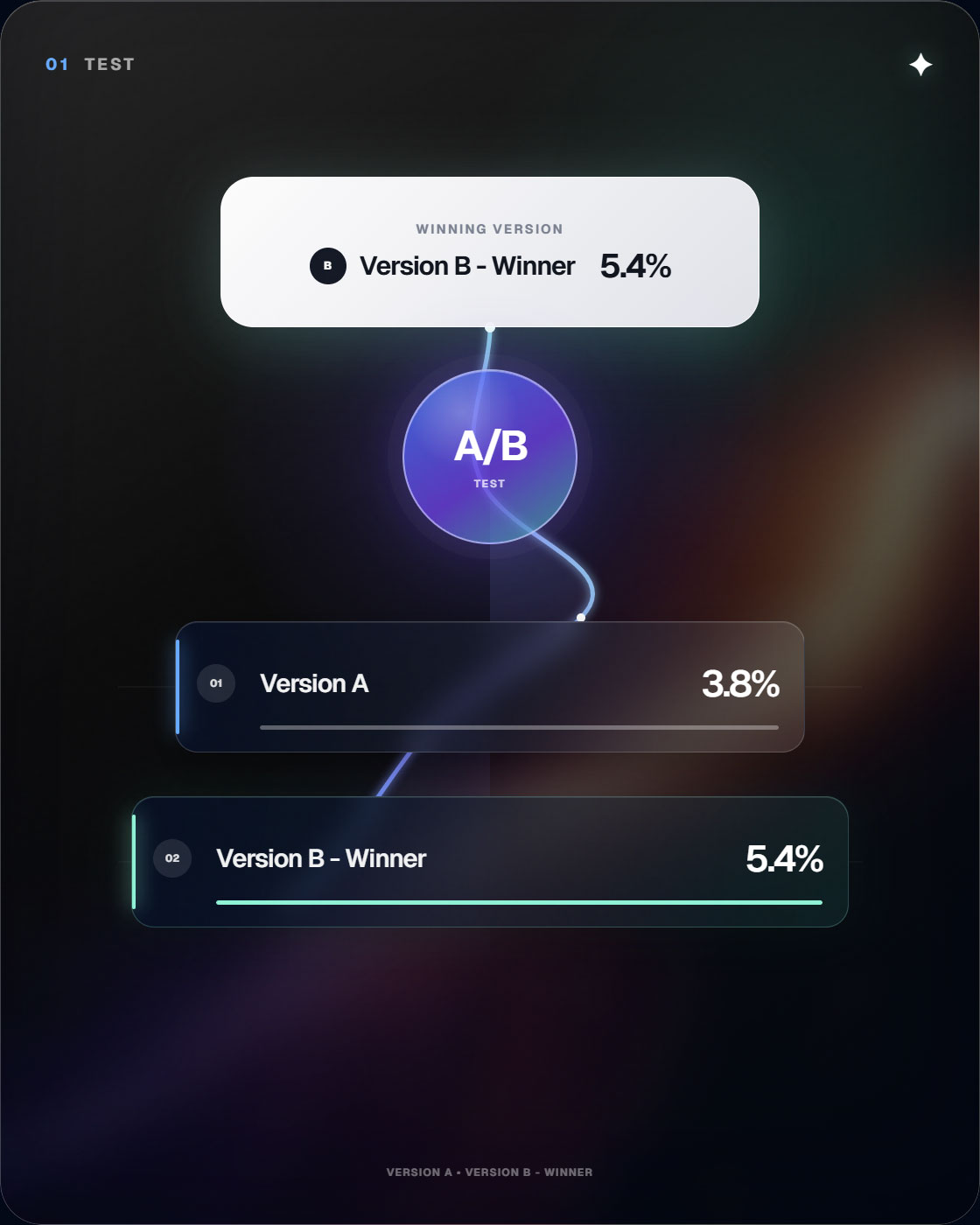
We prioritize high-impact variables such as headlines, value propositions, offers, calls to action, hero structure, proof placement, case-study presentation, page length, pricing presentation, form length, navigation, comparison framing, and demo or booking flows. Every test is tied to a decision and business outcome.
No. A valid experiment needs enough relevant traffic and conversions to separate a real pattern from random movement. Alskly reviews traffic, conversion volume, audience mix, and the expected size of the change before recommending a test. We do not declare a winner from a small sample simply because one version is temporarily ahead.
We use buyer research, message and journey analysis, usability evidence, sales feedback, conversion diagnostics, sequential releases, and longer measurement periods. High-confidence friction can still be removed, but findings are described honestly instead of presented as statistically proven test wins.
A test runs until it reaches an agreed evidence threshold and covers enough of the normal business cycle to be trustworthy. Duration varies with traffic, conversion volume, audience differences, seasonality, and effect size. Alskly avoids stopping a test early just because the first result looks positive.
We focus on business outcomes: qualified leads, booked calls, demo requests, purchases, conversion rate, sales opportunities, pipeline, and revenue. Supporting signals such as AI referrals, engaged sessions, form starts, proof interaction, path completion, and exit points help explain why performance changes.
Attribution is useful but never perfect. Answer engines, browsers, privacy controls, dark traffic, and multi-touch journeys can hide or split referral data. Alskly combines available referral signals, analytics, campaign conventions, forms, CRM outcomes, and sales feedback without claiming certainty the data cannot support.
No responsible partner can guarantee a specific uplift before seeing the traffic, offer, market, sales process, data quality, and implementation conditions. Alskly can commit to clear hypotheses, evidence-based priorities, transparent measurement, honest interpretation, and continuous improvement tied to commercial outcomes.
Pricing depends on research depth, number and complexity of pages, design and implementation responsibility, analytics requirements, experimentation, integrations, and ongoing optimization cadence. After reviewing the current site and goals, Alskly defines the scope, responsibilities, timing, deliverables, and investment before work begins.
It can be either. A focused project can research, redesign, and launch a defined conversion priority. Ongoing work adds measurement, experimentation, learning, and expansion across more pages or segments. The right model depends on traffic, internal resources, opportunity size, and how quickly the business wants to learn.
Only costs explicitly listed in the proposal are included. Experimentation tools, analytics products, CMS or ecommerce fees, paid media, fonts, images, external research, specialist development, and third-party services may be separate. Alskly identifies expected dependencies before approval whenever they are known.
Ownership and licensing are documented in the engagement scope. Your company should retain control of its website accounts, first-party customer data, analytics properties, and core business assets. Third-party software, fonts, images, templates, and testing platforms remain subject to their own licenses and subscription terms.
We request only the access and information needed for the agreed work and treat non-public commercial, customer, analytics, and technical information as confidential. Access levels, data handling, stakeholder permissions, retention, and any security review are agreed before sensitive systems are connected.
Alskly reviews your website, offer, target buyer, current visibility, and stated conversion goal. If there appears to be a strong fit, we schedule a focused conversation to clarify the constraint, available data, priorities, stakeholders, and the most useful next step.
Bring your priority offer, target buyer, primary conversion goal, current website, known friction, key traffic sources, available performance data, major competitors, and any launch deadline. Imperfect data is fine; clarity about the business decision matters more than a polished presentation.
The work moves from launch to learning. Alskly monitors agreed signals, reviews buyer behavior and sales feedback, identifies the next constraint, develops new hypotheses, and expands what works across additional pages, segments, offers, or journeys according to the agreed optimization cadence.
The audit is designed to give you a clear view of the opportunity and whether Alskly is the right partner. Any proposed engagement, scope, and terms are presented separately for your review before you decide.

Get found where buyers
search and ask.

.svg)